
Few floor designs have the lasting appeal of herringbone. Its zigzag pattern adds movement, depth and elegance to a room, and it has been admired in grand European homes for centuries. Today it is one of the most requested floor styles in Melbourne, suited to everything from period renovations to sleek modern apartments. At Ali Timber Flooring, we supply and install herringbone flooring across Caulfield and Melbourne, with the care and precision this pattern demands.
Whether you want real timber, engineered boards or a hybrid herringbone floor, our team helps you choose the right product and installs it neatly from start to finish. Get a free quote today.
Herringbone flooring is a pattern in which rectangular boards or blocks are laid at right angles to each other, forming a staggered zigzag that looks like the skeleton of a herring fish. Each piece has square-cut ends, and every board meets its neighbour at a 90-degree angle to create the design.
The pattern draws the eye across the room and makes floors appear richer and more detailed than straight plank layouts. It works in both small and large spaces, and it can look classic, contemporary or luxurious depending on the timber colour, board size and finish you choose.


People often confuse herringbone and chevron because both create a zigzag effect, but they are laid differently.
Herringbone uses boards with square-cut ends. They are placed at right angles to each other, so the ends form a staggered, broken zigzag.
Chevron uses boards with angle-cut ends, usually around 45 or 60 degrees. The pieces meet in a continuous, unbroken V-shape that runs in clean lines across the floor.
Herringbone has a more traditional look and is generally simpler to install, while chevron looks sleeker and more graphic and needs more cutting and precision. We can show you samples of both so you can see which suits your space.
Timeless style. The pattern has stayed fashionable for generations and works in both traditional and modern homes.
Visual interest. The zigzag pattern adds texture, movement and character that plain planks cannot match.
Makes rooms feel bigger or longer. Depending on how it is laid, the pattern can make a room feel wider, longer or more dynamic.
Adds value. A well-installed herringbone floor signals quality and craftsmanship, which appeals to buyers and renters.
Choice of materials. Herringbone is available in solid timber, engineered timber and hybrid, so it can suit different budgets and subfloors.
Hides everyday wear. The busy pattern helps disguise minor marks, dust and wear more easily than some plain floors.
Versatile colours and finishes. From pale natural oak to deep, dark tones, herringbone looks striking in almost any shade.

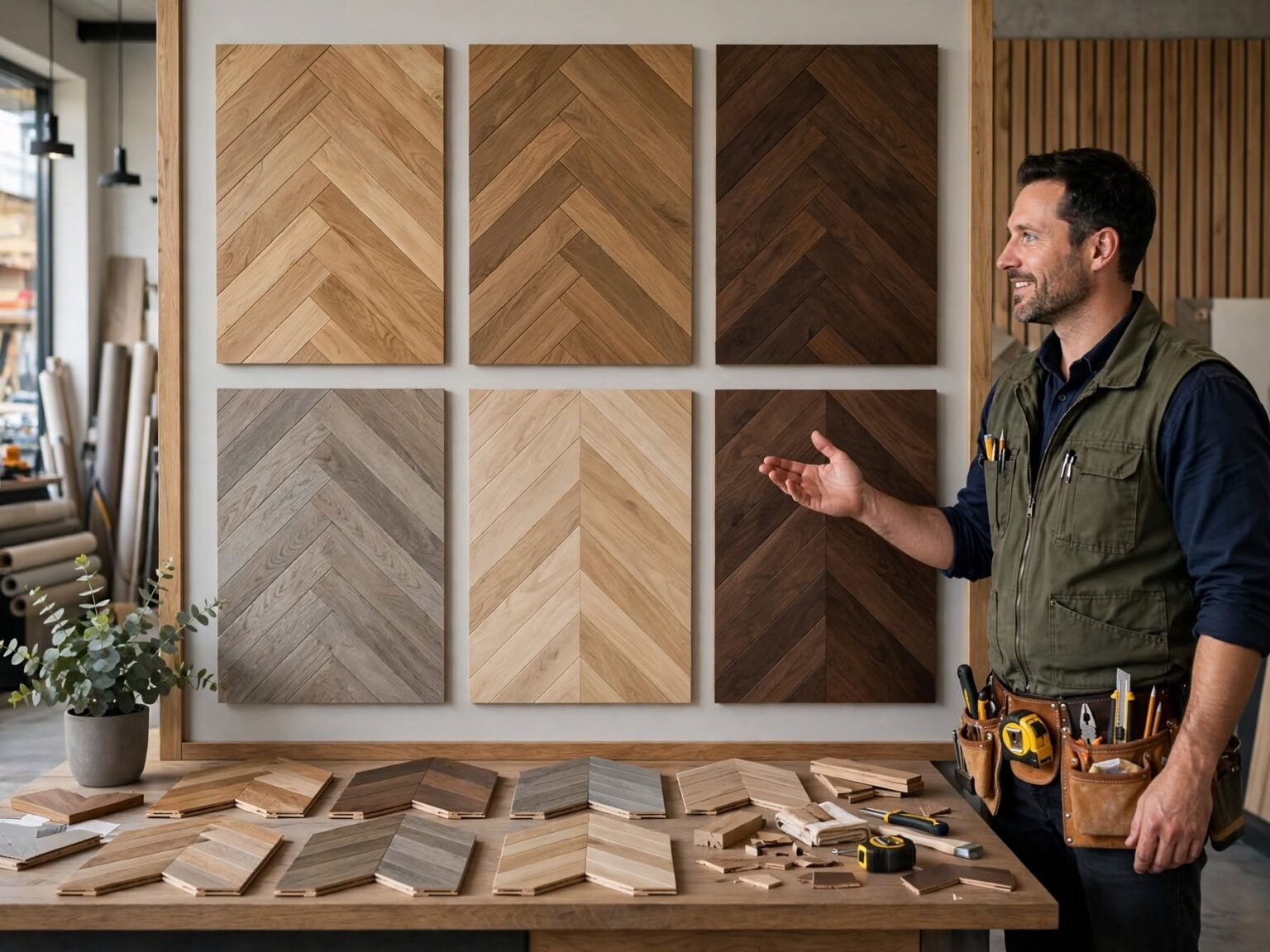
Solid timber herringbone gives the richest, most traditional look and can be sanded and refinished over the years. It is usually glued down and needs a flat, dry and stable subfloor. Learn more about timber flooring and hardwood flooring.
Engineered herringbone combines a real timber top layer with a stable base, so it handles changes in humidity better and suits concrete slabs and apartments. It is one of the most popular herringbone choices in Melbourne. See our engineered timber flooring page.
Hybrid herringbone gives you the pattern at a lower cost, with the added benefits of water resistance and durability. It is a great option for families, kitchens and rental properties. Visit our hybrid flooring page to learn more.
Laminate herringbone is another budget-friendly way to enjoy the pattern, with printed timber-look designs and a hard-wearing surface. See our laminate flooring page.
Board size. Smaller boards create a traditional, detailed look, while longer, wider boards feel modern and open. The size affects how busy the pattern appears.
Colour and tone. Light timbers make a room feel airy and bright, mid-tones feel warm and natural, and dark timbers feel dramatic and luxurious.
Finish. Matte and satin finishes give a modern, natural look, while a brushed finish adds texture and helps hide marks.
Room size and light. Large rooms and open-plan areas show off the pattern beautifully. In smaller rooms, a lighter tone and narrower boards keep the space feeling open.
Lifestyle. Homes with children and pets may suit hybrid or a hard-wearing finish, while formal living areas can feature solid or engineered timber.
Budget. Solid timber costs the most, engineered timber sits in the middle, and hybrid and laminate offer more affordable options.
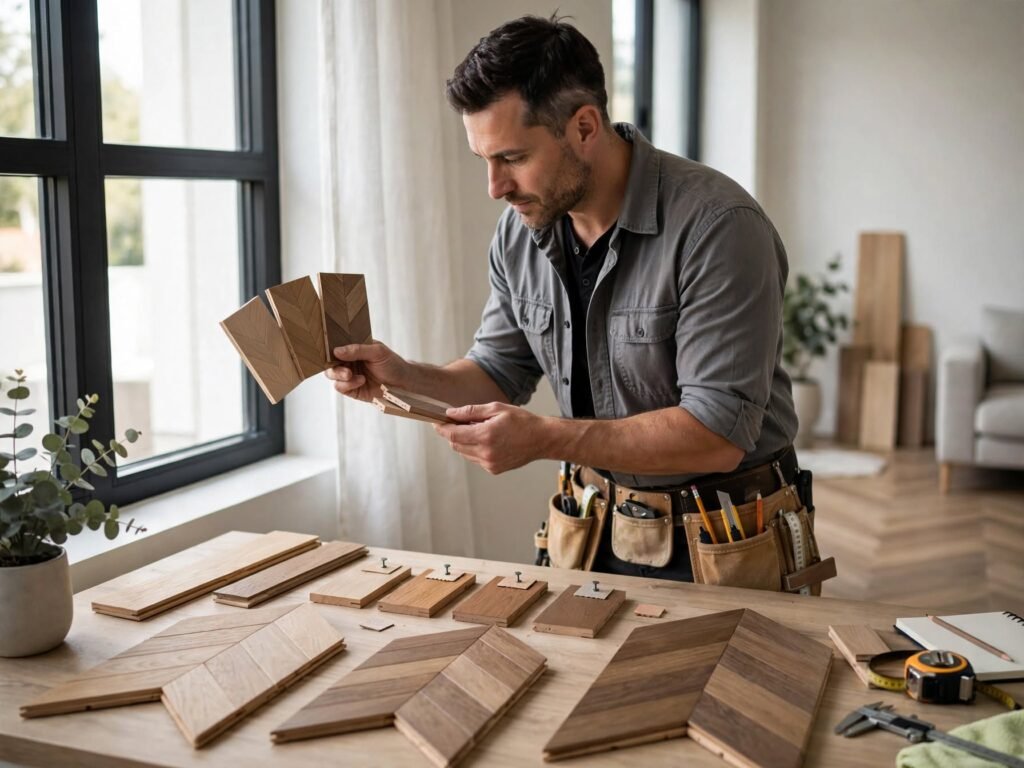
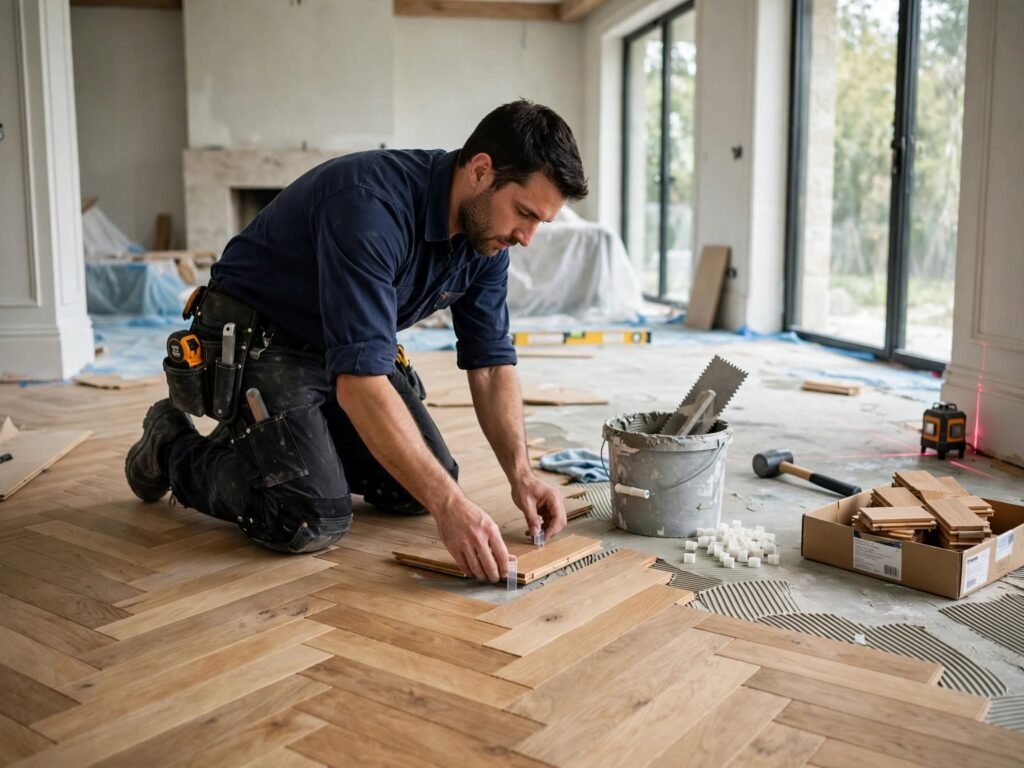
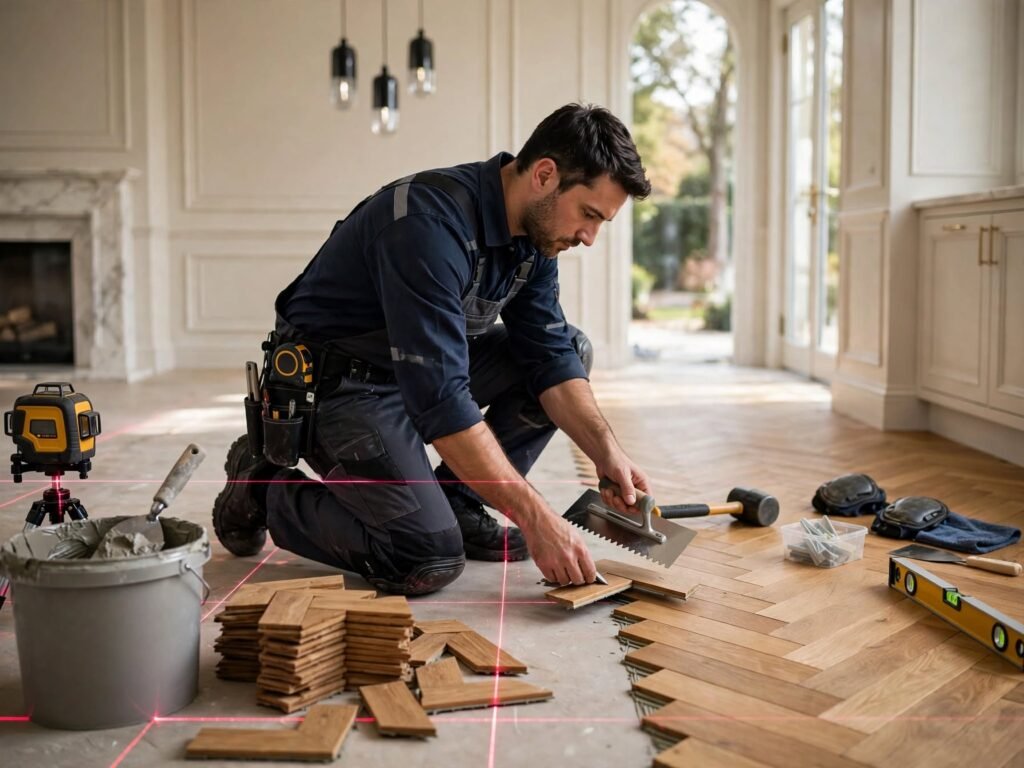
Herringbone is more demanding to install than straight planks, and the quality of the installation makes a big difference to the final look. The installer starts by measuring the room and marking a central line so the pattern sits symmetrically and meets the walls evenly. The boards are then laid outwards from this line, with each piece carefully aligned so the angles stay accurate.
Real timber and engineered herringbone are usually installed using the direct stick method, where each board is bonded to the subfloor with flooring adhesive. This keeps the pattern secure and gives a solid, quiet floor. Some hybrid and laminate herringbone products use a click-lock system and can be installed as a floating floor, depending on the manufacturer’s instructions.
Because the pattern has many small joints, accuracy is essential. Even a slight drift in alignment becomes noticeable across the room, which is why experienced installers make such a difference.
A herringbone floor shows every flaw in the surface beneath it. Dips, humps, cracks and moisture can cause lifting, uneven joints and gaps, and these problems are very visible in a patterned layout. The subfloor must be flat, clean, dry and solid before the first board goes down.
Our subfloor levelling service creates the smooth base this pattern needs, and our joist repair service strengthens weak timber structures. If you have noise issues in an existing floor, our squeaky noise fix service can solve them before installation. Because we handle everything together, your project is coordinated under one team.

1. Free consultation and quote. We visit your property, look at your space and discuss your style, budget and floor type.
2. Sample and product selection. We help you choose the right board size, colour and finish, so you can see how it will look in your home.
3. Subfloor inspection and preparation. We check flatness and moisture, then level, repair and clean the surface where needed.
4. Layout planning. We measure carefully and mark the centre line, so the pattern looks balanced and symmetrical.
5. Installation. We lay each board with precise alignment, tight joints and neat cuts around walls, doors and fixed objects.
6. Finishing. If the floor needs sanding and finishing, we complete this carefully. We then fit skirting, trims and stair nosing where needed.
7. Final check and clean-up. We inspect the finished pattern and leave your home or business clean and tidy.
Herringbone floors are easy to maintain. Sweep or vacuum regularly to remove grit that can scratch the surface, and clean with a lightly damp mop and a product suited to your floor type. Avoid soaking the floor, wipe spills quickly and use felt pads under furniture. Use mats at entrances, and follow the manufacturer’s care guide. With good care, your herringbone floor will look beautiful for many years.


In homes, herringbone looks stunning in living rooms, dining areas, hallways, entryways and bedrooms, and it is popular in both heritage and modern renovations. In commercial spaces such as boutiques, restaurants, hotels, offices and reception areas, a herringbone floor creates a polished, memorable first impression. We plan commercial installations to keep disruption low wherever possible.
We are flooring specialists, so we understand the planning, preparation and precision that patterned floors require. You deal with one team from the first consultation through to the final clean-up.
We offer honest, upfront pricing with a clear quote before work starts. Our customers regularly mention how fast and well-organised our jobs run. We are based in Caulfield, serve surrounding Melbourne suburbs and treat every property with care.
We provide herringbone flooring installation in Caulfield, Oakleigh, Brighton, Glen Waverley, Canterbury and surrounding Melbourne suburbs.

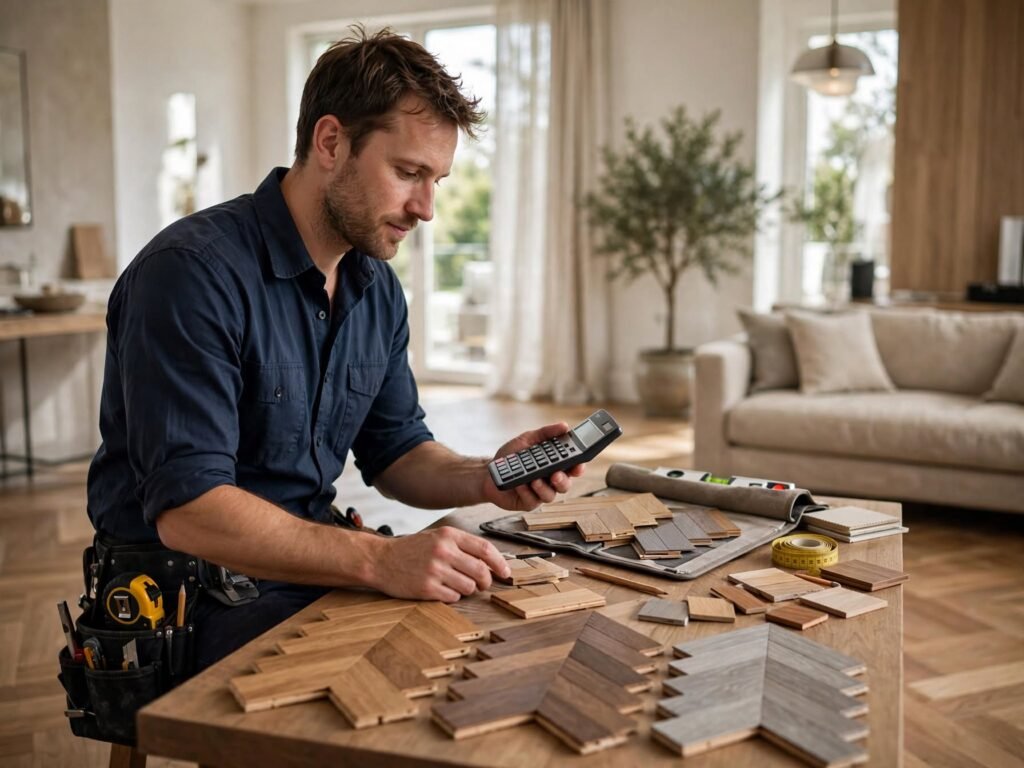
The cost depends on the material (solid timber, engineered timber, hybrid or laminate), the board size and quality, the size of the area and the complexity of the layout. Herringbone takes more time to install than straight planks, so labour is usually higher. Subfloor preparation, sanding, finishing and extras such as skirting also affect the total. Because every project is different, the best way to get an accurate price is a free consultation, after which we give you a clear, itemised quote with no surprises.


Premium laminate, timber, hybrid, hardwood & carpet flooring – crafted for elegance and durability.
©2025 Ali Timber Flooring. All rights reserved.
